Executive Summary
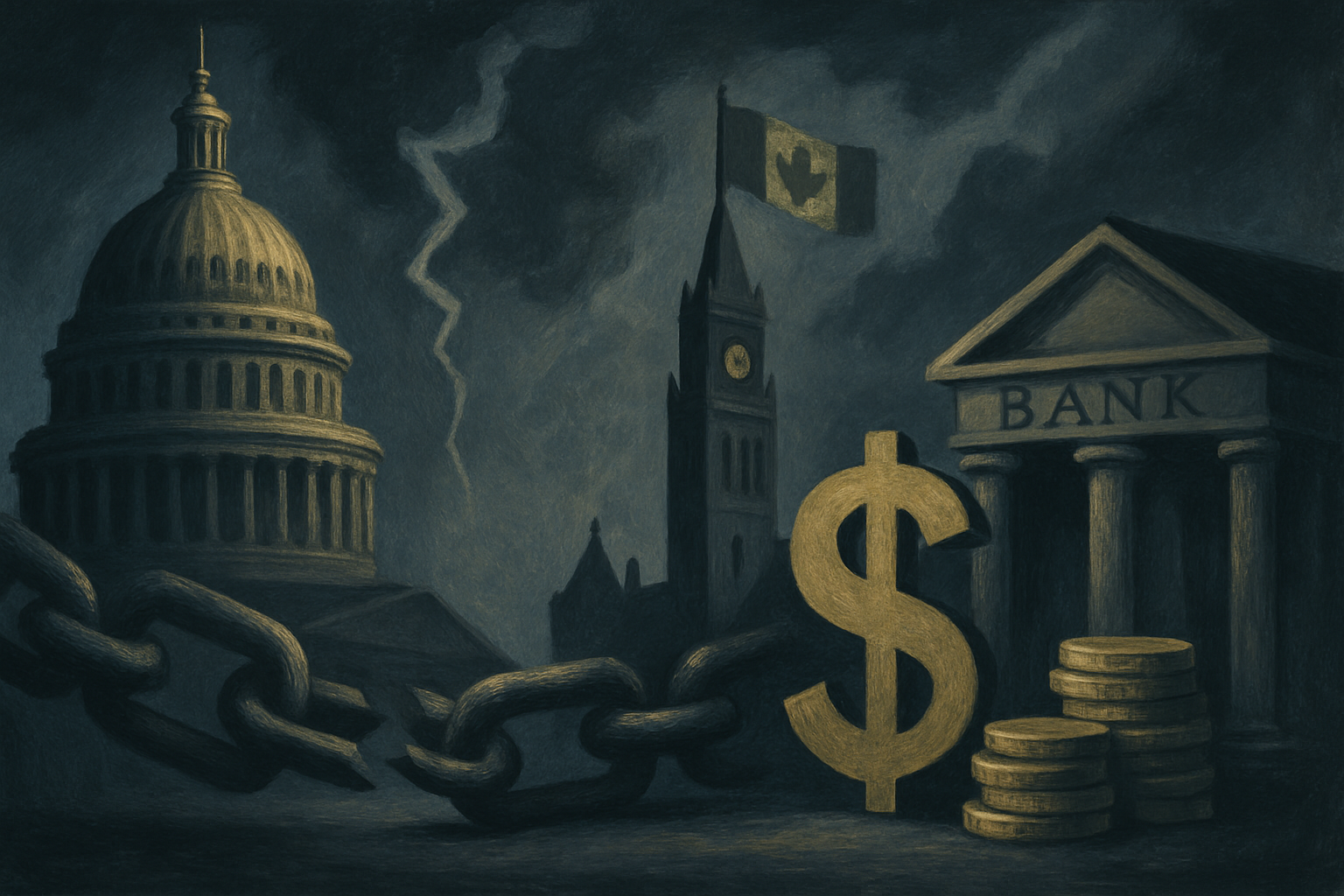
A potential trade conflict between the United States and Canada during a Trump administration could trigger a return to quantitative easing (QE) by the Federal Reserve, according to MarketWatch. This scenario is expected to be supportive for gold, stocks, and long-term bonds.
What Happened
MarketWatch reports that escalating trade tensions between the U.S. and Canada could result in the Federal Reserve reintroducing quantitative easing as a policy response. The publication notes that such a move would eventually benefit gold, equities, and long-dated government bonds.
BELLINGS Analysis
A renewed trade war with Canada, one of the United States' largest trading partners, would likely create significant economic uncertainty and disrupt cross-border supply chains. Should this scenario materialize, the Federal Reserve may resort to quantitative easing to mitigate potential negative impacts on growth and financial conditions. For credit and capital markets professionals, this signals a possible shift back toward an accommodative monetary policy regime, with implications for risk assets, yield curves, and credit spreads. The prospect of QE typically compresses yields, supports risk sentiment, and can drive flows into both investment grade (IG) and high yield (HY) credit, as well as into alternative stores of value such as gold. This development is notable relative to current market expectations for policy normalization and could alter the trajectory of rates and credit valuations.
Market Implications
If the Federal Reserve returns to quantitative easing in response to a U.S.-Canada trade war, market participants should anticipate downward pressure on long-term yields, a potential rally in gold and equities, and a supportive environment for risk assets. Credit spreads may tighten in the near term, but heightened trade uncertainty could also increase volatility and risk premiums across sectors exposed to North American trade flows.
Our Analysis
Based solely on MarketWatch's reporting, the prospect of renewed quantitative easing in response to trade tensions with Canada is a material development for credit markets. While the direct causal link between trade policy and monetary easing remains speculative without further detail, the scenario underscores the interconnectedness of trade policy and central bank actions. Market participants should closely monitor policy signals and prepare for renewed volatility and shifts in risk appetite should this scenario progress.